

Awaiting a cancer diagnosis is not easy. Everything goes quiet. The room feels still. Nothing matters except the next few words you know will change everything.
"We have reviewed the results of your biopsy and can confirm that you have breast cancer."
For most people, those words are unimaginable. For Awla Lax, they became reality twice.
Her first diagnosis came in 2014, after a routine mammogram ordered by her primary care provider revealed a mass. Lax said the news was devastating.
“My first cancer diagnosis was my hardest because I didn’t know anything about it,” Lax said.
“They treated me like a sister, like a friend, like a mother. They make you feel like they are with you all the time.”
After completing treatment for her first breast cancer, Lax later established care at JPS Medical Home Southeast Tarrant. As part of her ongoing care, her JPS team encouraged her to stay current on recommended preventive screenings, including her annual mammogram.
“When I started going to JPS, I loved how much they followed up with me, and they pushed me to stay on top of my screenings,” Lax said.
For nearly a decade, she stayed diligent about her annual mammograms. In 2023, she received a reminder from JPS and decided to take advantage of the mobile mammography unit, which brings preventive breast care to communities across Tarrant County.
Although she had recently received a normal mammogram result elsewhere, Lax decided to get screened again. That decision would prove important.
A few weeks later, she noticed repeated calls from JPS. Assuming it was a routine follow-up, she ignored them. After all, her recent mammogram had been negative.
“A couple of months later, I finally checked my voicemail and heard that my results were abnormal, and that’s when it hit me,” Lax said.
Follow-up testing confirmed what she feared most: her cancer had returned, nearly a decade after her first diagnosis.
Lax began receiving treatment at the JPS Oncology and Infusion Center, where she met Lauren Ramsey, MD, Medical Director of Breast Surgery. After having cancer once before, Lax was worried about what came next. But from her first visits, the way Dr. Ramsey and the JPS team cared for her helped ease her fear.
“They know how to talk to you and give you hope,” Lax said. “The doctors and nurses tell you that you are going to fight and that everything is going to be okay, so you’re not worried.”
That sense of comfort was exactly what she needed. Lax said the team took time to explain what was happening and made sure they answered any questions she had. Those interactions with her OIC care team gave her reassurance and helped her feel confident that she was in a place where she was truly cared for.
“They treated me like a sister, like a friend, like a mother,” Lax said. “They make you feel like they are with you all the time.” Because Lax had previously undergone radiation, Dr. Ramsey explained that mastectomy was the best course of treatment.
Lax’s previous treatment helped shape the approach to her care this time. Her first cancer had been treated with a lumpectomy, which removed the area of cancer while preserving the rest of the breast, followed by radiation. After reviewing her new diagnosis and treatment history, Dr. Ramsey talked with Lax about her surgical options, and Lax ultimately underwent a mastectomy, which removes the entire breast.
For Lax, the decision wasn’t easy. Losing a breast felt deeply personal, and she wrestled with how it would change her.
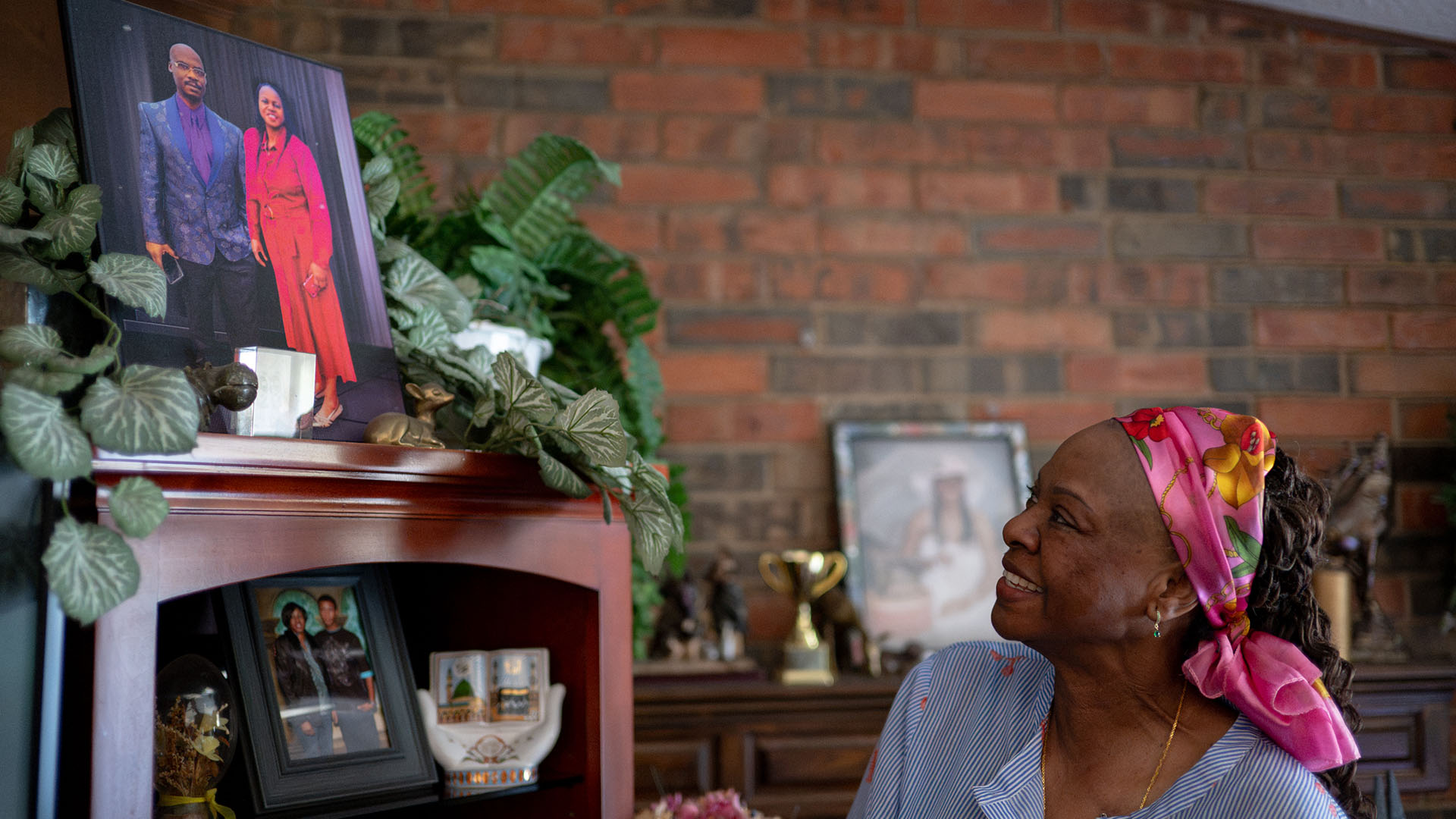
“I was thinking about how I’d look when I dressed or went swimming,” Lax said. “Then I told myself, this is my life, my choice, my health. I can’t worry about what people think. I have to do what keeps me alive.”
“Mrs. Lax is truly an inspirational and very strong patient,” Dr. Ramsey said. “I love being on the patient’s team and helping them get through surgery and get them cured.”
Because of the characteristics of Lax's cancer and her individual treatment plan, she did not require chemotherapy or additional radiation. Lax said learning more about her diagnosis and treatment options brought some relief.
“Dr. Ramsey told me it was stage two, and that gave me a lot of relief,” Lax said.
For Dr. Ramsey, Lax's experience reinforces an important message: staying current on recommended breast cancer screening can help identify cancer earlier, when there may be more treatment options.
“We recommend women of average risk start annual mammograms at age 40,” Dr. Ramsey said. “If you have higher risk factors, like a family history or abnormal biopsies, your doctor might recommend starting earlier. Early detection allows us to catch cancer at a point where we can treat it more effectively, with fewer complications.”
Lax’s journey also reflets the connections across JPS care. From her primary care team encouraging her to stay current on screening, to the mobile mammography unit that detected an abnormality, to the specialists at the Oncology and Infusion Center who guided her through diagnosis and treatment, Lax had a team helping her navigate each step. Lax's experience highlights the importance of access to high-quality care and its impact on a patient's future.
Today, Lax is back to swimming, spending time with her grandchildren, and embracing life with a deeper sense of gratitude.
“I told myself, ‘I’m not that old. I still have more life to live.’ I prayed, stayed positive, and reminded myself that every day is a blessing,” Lax said.
Dr. Ramsey continues to see Lax for follow-up care and says watching patients like Lax return to their lives is one of the most rewarding parts of her work.
“It’s wonderful to see them back with their families, doing what brings them joy,” Dr. Ramsey said. “Cancer doesn’t define them; it’s just one chapter in their story. They have so much more life to give and so many more people to touch.”
Lax has a message of her own for anyone facing a cancer diagnosis: Don’t give up.
“Cancer doesn’t mean the end of your life,” Lax said. “There’s more life ahead. You just have to believe that and keep going.”
JPS is here to serve every patient with compassion and care, no matter the diagnosis. To connect with care, visit jpshealthnet.org/get-care/services.